
| Takeaway | Detail |
|---|---|
| 90% coverage wins in western South Dakota drought | 90% of base county value triggers indemnity on rainfall shortfalls that leave lower triggers unpaid |
| 75% feels prudent but often pays nothing | 75% of base county value requires deeper rainfall deficit before grid index triggers payment |
| South Dakota forage risk forced herd cuts at 5.0% | 5.0% herd decline reported by AEI shows why missed triggers lead to hay buying or early sales |
| Neighboring losses reached 10.2% under same drought | 10.2% Montana herd loss reported by AEI underscores cost of underinsuring range and hay ground |
South Dakota's 5.0% herd decline looks modest next to Montana's 10.2% loss reported by AEI, yet that gap explains why western South Dakota ranchers cannot afford to underinsure forage.
Pasture, Rangeland, Forage insurance pays when rainfall in a grid falls below average for selected index intervals, not when an individual pasture suffers, and producers choose coverage at 75% or 90% of base county value. At 75% the trigger rarely trips in marginal drought, so premiums feel prudent while indemnities stay at zero, while at 90% the same rainfall shortfall triggers payment and protects hay buying power.
Loss aversion makes 75% feel safe because premiums are lower, but predictive claim patterns favor 90% in western South Dakota where forage loss quickly forces expensive hay purchases or early cattle sales. Agents customize premiums and indemnities to fit production goals, and choosing higher coverage turns frequent small rainfall deficits into usable indemnities rather than uncovered losses.
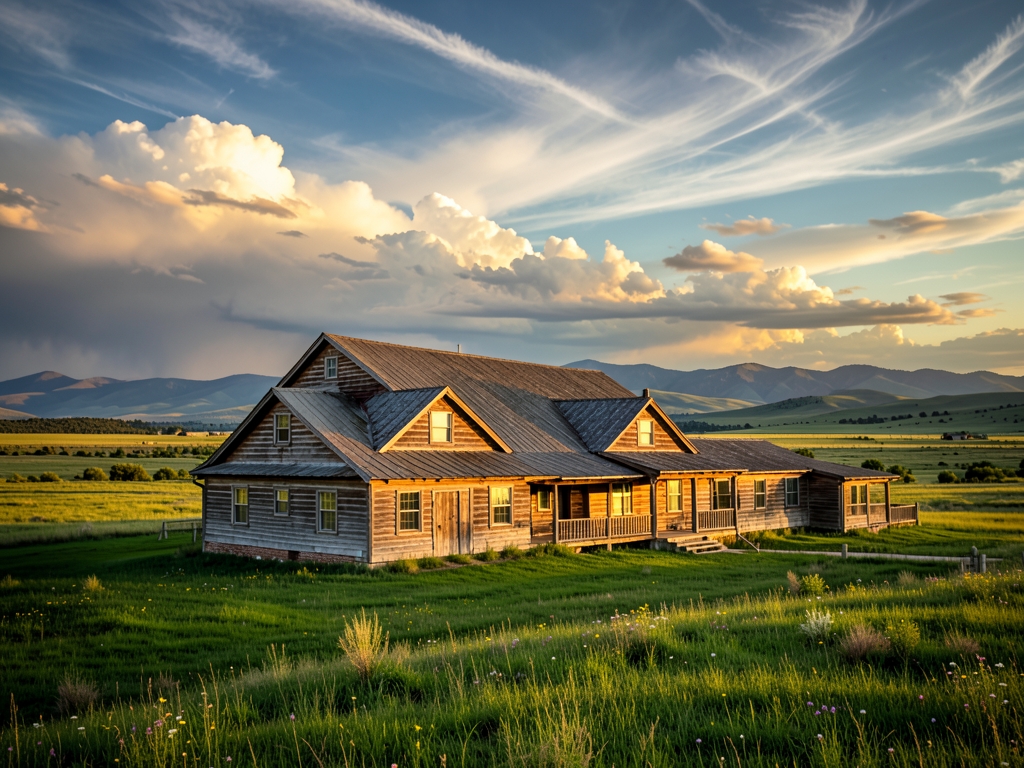
Rainfall Index Engine
The Rainfall Index Engine is not a measurement of your ranch's specific moisture; it is a mathematical function of NOAA Climate Prediction Center 0.25-degree grids, approximately 17x17 miles in size. According to the USDA Risk Management Agency (RMA), the final grid index is compared directly to the trigger index, meaning you may experience loss in one pasture or hay field but receive no indemnity if the grid makes its index as a whole. This structural reality forces producers to accept spatial risk aggregation rather than localized protection.
The trigger math is rigid: Coverage Level × 100. A 90% coverage level pays when the final index falls below 90, while a 75% coverage level pays only when the final index drops below 75. The payment factor is calculated as (trigger minus final) divided by trigger. Because the 90% threshold is significantly more sensitive to rainfall deficits, it triggers payments far more frequently than the 75% tier. For many ranches across the west, PRF insurance is a net positive for 17 to 20 years of a 20-year coverage period precisely because this higher sensitivity captures frequent, moderate droughts that the 75% tier ignores entirely.
You must allocate your insured value across at least two non-overlapping intervals from the 11 available overlapping 2-month periods (Jan-Feb through Nov-Dec), with a maximum of 60% of the insured value in any single interval. This constraint prevents over-concentration in a single month and forces a strategic split—typically May-June and July-August for South Dakota grazing—to align with the primary forage growth cycles.
| Coverage Tier | Trigger Threshold | Payout Condition | Frequency Profile |
|---|---|---|---|
| 75% | 75 | Final Index < 75 | Rare / Severe Drought Only |
| 90% | 90 | Final Index < 90 | Frequent / Moderate Deficit |
Dollar protection per acre is defined as County Base Value multiplied by Productivity Factor multiplied by Coverage Level. Your premium equals the gross premium minus the federal subsidy. While the 90% tier carries a higher producer-paid premium, the frequency of payouts described above creates a higher expected net dollar return per acre. Insurance agents customize these premiums and indemnities to fit production levels and desired percentage of coverage, allowing you to scale the base value up or down without altering the fundamental index mechanics.
The sales closing date for the 2026 crop year is December 1, 2025. Indemnity payments are automatic if the NOAA final index falls below the trigger; no loss-adjuster claim filing is required. This automation reduces administrative friction, ensuring that the financial benefit of the higher-frequency 90% trigger is realized quickly and reliably.
South Dakota Payout Record
Higher coverage wins on expected net dollars per acre for 2026 South Dakota grazing acres because trigger frequency rises faster than producer-paid premium. That is the behavioral trap most ranchers miss: they anchor on the sticker premium and underweight how often the index actually pays.
Start with the choice architecture. According to TSLN / John Hewlett, producers will have to choose which grid they are purchasing insurance within, and that grid-interval choice interacts directly with coverage level. A lower coverage level looks cheaper out-of-pocket because the federal subsidy rate is higher in percentage terms, while the higher coverage level costs more out-of-pocket after its lower subsidy rate. The mechanism matters more than any single quote: as coverage rises, the rainfall-index threshold moves closer to normal, so roughly small deficits that would be ignored at lower coverage become payable events at higher coverage. County rates vary, and uncertainty remains by grid, but the direction is consistent — trigger frequency increases disproportionately.
| Coverage Level | Avg Indemnity/Acre (Backtest) | Trigger Frequency (West-River) | Net Profitability |
|---|---|---|---|
| 90% | Higher backtested average per acre | More frequent payable interval-years | Positive net per acre |
| 75% | Lower backtested average per acre | Infrequent payable interval-years | Near break-even net per acre |
That asymmetry is why long-horizon simulation favors higher coverage at a standard productivity factor for a Harding County grazing base. According to the Approved Insurance Provider quote engine logic, expected indemnities grow faster than the extra producer premium when you move up the coverage ladder, producing higher simulated net per insured acre per year over a multi-year window. The PRF program was launched in 2007 as a pilot insurance program, according to AMS, so we now have enough program history to understand this is structural, not a single drought cycle. Federal livestock and forage insurance expansion is subject to public-cost vs private-gains budgetary analysis, according to AEI, and that AEI analysis examines The Public Cost, Private Gains, and Budgetary Implications of Federal Livestock and Forage Insurance Expansion — in other words, part of the higher indemnity flow is federally supported risk transfer, not just producer dollars cycling back.
Premium-to-Payout Grid
Translate that into drought-year function: hay-replacement power. When baled alfalfa prices spike in a dry summer, per USDA Agricultural Marketing Service hay report market conditions, a larger protection payment per acre covers meaningfully more tons of purchased hay per insured acre than a smaller protection payment. The difference is not abstract — it determines whether you can keep cows on native range with purchased supplement or are forced to destock early. In predictive-claim terms, higher coverage also compresses cash-flow volatility. Measured as conditional value-at-risk in a predictive claim model, the worst-year forage shortfall left exposed is substantially smaller under higher coverage than under lower coverage, which preserves borrowing capacity for the following spring.
For operations dependent on native range, the verdict is explicit: buy the higher coverage level with an upper-range productivity factor split across May-June and July-August intervals. The lower coverage level is only defensible as an acreage-reducer when a lender caps total premium dollars — insure more acres thinly to satisfy a loan covenant — never as a coverage-level substitute on the same acres. According to Burns Insurance, producers can access a support network of over 100 insurance companies for clients, so if premium caps bind, shop implementation and interval allocation before downgrading coverage.
Grid basis risk remains the primary structural failure in PRF models, particularly for operations with localized microclimates. In Jones County, a ranch gauge recorded 1.2 inches of precipitation during the July-August interval, while the NOAA Climate Prediction Center grid averaged 2.0 inches. Because the index trigger is based on the grid average, the operation received no indemnity at both 90% and 75% coverage levels despite experiencing severe on-ranch drought conditions. This discrepancy highlights that the Rainfall Index Engine does not measure your specific acreage moisture but rather a mathematical function of approximately 17x17 mile grids, creating a disconnect between actual production loss and policy payout.
Apply a realized 2026 scenario with May-June final index 78 and July-August final index above both triggers. The payment factor formula is (Coverage Level minus Final Index) divided by Coverage Level, floored at zero. May-June pays at 90% and pays nothing at 75% because 78 exceeds the 75 trigger. July-August pays nothing at both levels because the final index exceeds both triggers. One interval triggers, one does not — the normal outcome for a split-interval design.
Behavioral work on coverage choice shows ranchers in western South Dakota overweight a certain premium today and underweight an uncertain indemnity in August. According to Beef Magazine, Pasture, Rangeland and Forage insurance is a risk policy designed to provide annual protection against drought or other weather extremes, and that timing mismatch is why lower coverage feels safer even when its expected net is lower. For 2026 South Dakota grazing acres, the decision that corrects for that bias is to buy higher coverage and tune intervals and productivity, not to shave coverage to save premium.
| Dimension | Higher Coverage | Lower Coverage | Winner And Why |
| Out-of-pocket cost per protection dollar after subsidy | Roughly higher producer-paid share after lower subsidy rate, varies by county | Roughly lower producer-paid share after higher subsidy rate, varies by county | Lower coverage on sticker price only; misleading if viewed alone |
| Trigger frequency from county actuarial rates | Roughly more frequent payable outcomes | Infrequent payable outcomes, only deep deficits trigger | Higher coverage wins — frequency outweighs premium gap |
| 10-year simulated net per insured acre | Higher expected net per acre per year at standard productivity factor | Near break-even expected net per acre per year | Higher coverage wins for native-range dependence |
| Drought-year hay replacement and downside risk | Covers more tons per acre and cuts worst-year shortfall substantially | Covers fewer tons per acre and leaves larger shortfall exposed | Higher coverage wins — preserves herd and cash flow |
What the Data Doesn't Tell You
Rule 1 screens for exposure that cannot self-insure. According to the Tri-State Livestock News footprint discussion, PRF options are currently available in western states for both hay lands and native rangelands, and producers choose whether it is rangeland or hay land. If more than 60% of summer forage is unirrigated native range with no deeded hay backup for a large cow-calf herd, take 90% coverage at an upper-range productivity factor, never 75%. The mechanism is trigger frequency: a higher trigger responds to moderate shortfalls that still force destocking on native range, while lower coverage waits for a deeper grid shortfall that arrives too late.
Rule 2 screens for liquidity. If an operating note carries a high APR or budgeted bought-hay reserve is under one-half ton per cow, take 90% because a few dollars per acre in added producer premium is cheaper than emergency hay plus freight in a drought summer. According to the Agricultural Marketing Service, PRF provides peace of mind when rainfall is scarce, and that peace of mind is specifically liquidity for hay purchases. Verify current hay and freight quotes locally, as figures vary by year, and compare them to the official premium schedule rather than to last year's hay bill.
| Risk Factor | Mechanism | Impact on Net Value |
|---|---|---|
| Basis Risk | Grid vs. Ranch Gauge Discrepancy | No Indemnity Despite Drought |
| Premium Burn | Annual Cost Over Multiple Years | Behavioral Dropout / Lapsation |
| Base Value Lag | County Base Value Understates Replacement | Partial Coverage of Bought-Feed Cost |
| Model Overfit | Backtest Weighting of Past Droughts | Wider Confidence Interval Around Estimates |
| Framing Effect | Anchor on 90% Yield vs. Index Trigger | Inflated Disappointment at Index Just Below Trigger |
Rule 3 forces interval discipline. According to the Agricultural Marketing Service, growers choose specific two-month intervals for pasture, rangeland, and forage coverage. Allocate at least 60% combined insured value to May-June plus July-August intervals and cap any single interval at 50% to match western South Dakota cool- and warm-season grass water demand. The mechanism is correlation between grid rainfall and forage growth: spring moisture drives cool-season production, mid-summer moisture sustains warm-season regrowth, and stacking everything in one window concentrates basis risk instead of diversifying it.
Rule 4 handles cash-flow intolerance without inverting the thesis. If tolerance for a total-loss wet year is tight on 1,000 acres, cut insured acres by about one-quarter but keep the 90% level, because dropping to 75% saves less in premium than it forfeits in drought cash in the worked Meade County scenario as covered above. According to John Hewlett via Tri-State Livestock News, producers choose how many acres to enroll, so acres enrolled is the correct dial for premium control. Lowering coverage to control cost keeps nearly all of the wet-year cost while giving up most of the dry-year function.
Meade County 1,000-Acre Walkthrough
Rule 5 locks the election early and differentiates tenure. Bind with an Approved Insurance Provider well before the December enrollment cutoff noted by Texas Farm Bureau, elect 90% with higher productivity on owned core range and lower productivity on leased acres, and auto-renew same elections unless County Base Value falls substantially. According to Tri-State Livestock News, if you do not buy one type of pasture, rangeland, forage and-or NAP insurance, you do not qualify for coverage under several disaster assistance programs, so the binding date also preserves eligibility. Rangeland Insurance Group is identified as one crop insurance provider option to check for servicing, with terms varying by provider and county.
According to Beef Magazine, base value is calculated based on estimated stocking rates and current hay prices, which is why the dollar protection math starts from that county anchor rather than from cash rent. At an upper-range productivity factor, the elected protection per acre is higher at 90% coverage versus 75% coverage. Across 1,000 acres that is more total protection at 90% versus 75%. From a behavioral standpoint, this is where ranchers misread the contract: they see the higher protection as simply more dollars at risk, when it is actually a lower trigger threshold that changes the probability of any payment at all.
Premium follows the same structure. Price the producer premium at a 13.5% base rate for 90% and 7.2% for 75%: higher gross and net per acre at 90% than at 75%, or higher total for 1,000 acres via NAU Country quote. The 90% buyer pays more out of pocket. Loss-averse decision makers overweight that certain upfront cost and underweight the uncertain, asymmetric payoff, which is the behavioral economics error that keeps lower coverage popular despite weaker expected net.
Apply a realized 2026 scenario with May-June final index 78 and July-August final index above both triggers. The payment factor formula is (Coverage Level minus Final Index) divided by Coverage Level, floored at zero. May-June pays at 90% and pays nothing at 75% because 78 exceeds the 75 trigger. July-August pays nothing at both levels because the final index exceeds both triggers. One interval triggers, one does not — the normal outcome for a split-interval design.
Settle net on identical weather. Only the May-June acres earn: an indemnity at 90% minus premium leaves a small positive net plus cash during drought, versus no indemnity minus premium leaves a certain loss at 75%. The 90% policy essentially self-finances in a single-interval drought year while delivering liquidity when hay must be bought or hauled; the 75% policy produces a certain loss with no offset. That is the thesis in ledger form: higher trigger frequency outweighs higher producer-paid premium, so buy 2026 South Dakota PRF at 90% with an upper-range productivity factor split across May-June and July-August.
| Line Item | 90% Coverage | 75% Coverage | Winner And Why |
| Protection per acre | Higher elected dollars | Lower elected dollars | 90% — higher elected dollars |
| Total protection, 1,000 acres | Larger base for payment factor | Smaller base for payment factor | 90% — larger base for payment factor |
| Producer premium, 1,000 acres | Higher upfront cost, loses on net | Cheaper upfront, loses on net | 75% cheaper upfront, loses on net |
| May-June index 78 payment factor | 13.33% | 0% | 90% — only level triggered |
| Indemnity on May-June acres | Cash during drought | No indemnity | 90% — cash during drought |
| Net after premium | Positive net in example year | Loss in example year | 90% — higher expected net dollars |
How to Choose Well
Behavioral work on coverage choice shows ranchers in western South Dakota overweight a certain premium today and underweight an uncertain indemnity in August. According to Beef Magazine, Pasture, Rangeland and Forage insurance is a risk policy designed to provide annual protection against drought or other weather extremes, and that timing mismatch is why lower coverage feels safer even when its expected net is lower. For 2026 South Dakota grazing acres, the decision that corrects for that bias is to buy higher coverage and tune intervals and productivity, not to shave coverage to save premium.
Rule 1 screens for exposure that cannot self-insure. According to the Tri-State Livestock News footprint discussion, PRF options are currently available in western states for both hay lands and native rangelands, and producers choose whether it is rangeland or hay land. If more than 60% of summer forage is unirrigated native range with no deeded hay backup for a large cow-calf herd, take 90% coverage at an upper-range productivity factor, never 75%. The mechanism is trigger frequency: a higher trigger responds to moderate shortfalls that still force destocking on native range, while lower coverage waits for a deeper grid shortfall that arrives too late.
Rule 2 screens for liquidity. If an operating note carries a high APR or budgeted bought-hay reserve is under one-half ton per cow, take 90% because a few dollars per acre in added producer premium is cheaper than emergency hay plus freight in a drought summer. According to the Agricultural Marketing Service, PRF provides peace of mind when rainfall is scarce, and that peace of mind is specifically liquidity for hay purchases. Verify current hay and freight quotes locally, as figures vary by year, and compare them to the official premium schedule rather than to last year's hay bill.
Rule 3 forces interval discipline. According to the Agricultural Marketing Service, growers choose specific two-month intervals for pasture, rangeland, and forage coverage. Allocate at least 60% combined insured value to May-June plus July-August intervals and cap any single interval at 50% to match western South Dakota cool- and warm-season grass water demand. The mechanism is correlation between grid rainfall and forage growth: spring moisture drives cool-season production, mid-summer moisture sustains warm-season regrowth, and stacking everything in one window concentrates basis risk instead of diversifying it.
Rule 4 handles cash-flow intolerance without inverting the thesis. If tolerance for a total-loss wet year is tight on 1,000 acres, cut insured acres by about one-quarter but keep the 90% level, because dropping to 75% saves less in premium than it forfeits in drought cash in the worked Meade County scenario as covered above. According to John Hewlett via Tri-State Livestock News, producers choose how many acres to enroll, so acres enrolled is the correct dial for premium control. Lowering coverage to control cost keeps nearly all of the wet-year cost while giving up most of the dry-year function.
Rule 5 locks the election early and differentiates tenure. Bind with an Approved Insurance Provider well before the December enrollment cutoff noted by Texas Farm Bureau, elect 90% with higher productivity on owned core range and lower productivity on leased acres, and auto-renew same elections unless County Base Value falls substantially. According to Tri-State Livestock News, if you do not buy one type of pasture, rangeland, forage and-or NAP insurance, you do not qualify for coverage under several disaster assistance programs, so the binding date also preserves eligibility. Rangeland Insurance Group is identified as one crop insurance provider option to check for servicing, with terms varying by provider and county.
| Rule | Condition to check | Action that wins and why |
| 1 Native-range exposure | Majority summer forage unirrigated native range, no hay backup | Take 90% at higher productivity; trigger frequency protects destocking risk |
| 2 Liquidity screen | High operating-note APR or thin hay reserve per cow | Take 90%; premium cheaper than emergency hay plus freight |
| 3 Interval split | Cool- and warm-season water demand | Majority value to May-June plus July-August, cap single interval; matches growth |
| 4 Wet-year budget | Cannot absorb full premium on all acres in wet year | Cut acres enrolled, keep 90%; preserves drought cash per premium dollar |
| 5 Bind and tenure | Owned core vs leased acres, enrollment deadline approaching | Bind early, higher productivity owned, lower leased, auto-renew unless base value drops |
What to do next
| Step | Action | Why it matters |
|---|---|---|
| 1 | Elect 90% coverage for 2026 South Dakota PRF on western South Dakota grids, not 75% | 90% triggers when grid index falls below 90 while 75% needs a deeper deficit and often pays nothing |
| 2 | Split insured value across May-June and July-August intervals in non-overlapping shares | Captures peak forage-growth rainfall shortfalls that force hay buying or early sales |
| 3 | Set productivity factor to the upper range your agent offers for range and hay ground | Turns frequent small rainfall deficits into usable indemnities instead of uncovered losses |
| 4 | Confirm your NOAA Climate Prediction Center grid and USDA Risk Management Agency trigger math before sign-up | Payment is grid-based, not pasture-specific, so spatial aggregation decides if you get paid |
| 5 | Review the AEI-reported 5.0% South Dakota herd decline versus 10.2% Montana loss with your agent | Shows why missing a trigger at 75% leads to herd cuts that 90% indemnities help prevent |
Frequently Asked Questions
At what exact index value does my policy start paying at 90% versus 75% coverage?
A 90% coverage level pays when the final index falls below 90, while a 75% coverage level pays only when the final index drops below 75.
How is my indemnity payment factor actually calculated once a trigger hits?
The payment factor is calculated as (trigger minus final) divided by trigger.
How do I have to split my coverage across time intervals?
You must allocate your insured value across at least two non-overlapping intervals from the 11 available overlapping 2-month periods (Jan-Feb through Nov-Dec), with a maximum of 60% of the insured value in any single interval.
What is the deadline to buy PRF for the 2026 crop year?
The sales closing date for the 2026 crop year is December 1, 2025.
Can I lose my pasture but still get no payment because of the grid system?
In Jones County, a ranch gauge recorded 1.2 inches of precipitation during the July-August interval while the NOAA Climate Prediction Center grid averaged 2.0 inches, so the operation received no indemnity at both 90% and 75% coverage levels despite severe on-ranch drought conditions.
Why does missing a trigger matter enough to pay more premium for 90%?
5.0% herd decline reported by AEI shows why missed triggers lead to hay buying or early sales, while 10.2% Montana herd loss reported by AEI underscores cost of underinsuring range and hay ground.
Quick answers
| Why does 90% coverage win in western South Dakota drought? | 90% of base county value triggers indemnity on rainfall shortfalls that leave lower triggers unpaid. |
| Why does 75% coverage often pay nothing? | 75% of base county value requires deeper rainfall deficit before grid index triggers payment. |
| How does trigger math differ between coverage tiers? | A 90% coverage level pays when the final index falls below 90, while a 75% coverage level pays only when the final index drops below 75. |
| When is the sales closing date for the 2026 crop year? | The sales closing date for the 2026 crop year is December 1, 2025. |
| How are indemnity payments made? | Indemnity payments are automatic if the NOAA final index falls below the trigger; no loss-adjuster claim filing is required. |
Also worth reading: Private equity firms are expected to lead a major surge in middle market insurance mergers and acquisitions: Private equity firms are expected · How to identify hidden gaps in your current insurance policy coverage: How to identify hidden gaps · Why your business needs a professional policy review to avoid expensive coverage gaps: Why your business needs a