
| Takeaway | Detail |
|---|---|
| Ambiguity triggers significant premium penalties in automated systems. | Premiums rise when data is missing |
| Straight-through processing remains the primary efficiency target for carriers. | 75% |
| Administrative burdens consume substantial underwriter capacity. | 35.3% |
| Cross-vertical literacy is critical for successful automation projects. | more than twelve mid-market carriers |
In the evolving landscape of homeowners insurance underwriting, ambiguity has become a costly liability rather than a neutral stance. As predictive models tighten their grip on risk assessment, leaving critical data points blank invites immediate financial consequences. The 2026 underwriting environment penalizes uncertainty with precision, transforming non-disclosure from a strategic choice into a direct driver of higher costs for policyholders who fail to provide complete information upfront.
The mechanism behind this shift lies in the design of modern Automated Underwriting Systems (AUS). These engines do not merely process applications; they interpret silence as elevated risk. When an applicant omits details such as roof age or prior loss history, the algorithm compensates for the missing data by applying a risk surcharge. This behavior underscores a fundamental change in how credibility is signaled and valued within the digital quoting pipeline.
For industry stakeholders, the focus must now turn to governance and transparency. With straight-through processing targets reaching up to 75%, the speed of decision-making leaves little room for manual clarification. Insurers are increasingly leveraging cross-vertical insights to refine these models, ensuring that disclosure acts as a credibility signal to lower tiers rather than a confession that raises them. Understanding this dynamic is essential for navigating the new equilibrium between automation and accurate risk pricing.
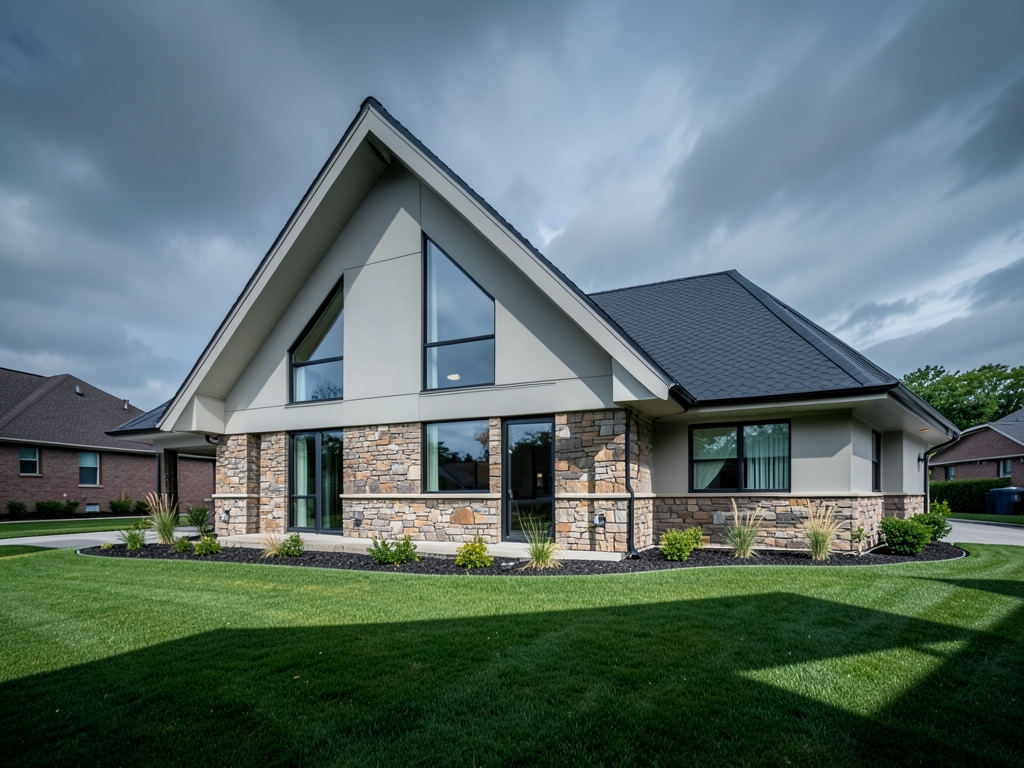
Why Blank Boxes Cost More
Blank fields in the application form are not neutral; they act as triggers for automated underwriting systems (AUS) that default to higher-risk tiers. According to Higson Blog, an AUS evaluates applicant risk against pre-configured rules and predictive models without manual review. When you leave roof age and 5-year loss history blank, the system does not pause for human judgment. Instead, it executes a silent-application lift, moving your policy from Preferred to Standard tier. This is not a penalty for bad luck; it is a deterministic outcome of missing data points in a high-velocity pricing engine.
The mechanism begins with LexisNexis C.L.U.E. auto-pulls. If the 5-year history box is empty, the model defaults to a Standard tier classification, applying a premium lift over the Preferred base rate. There is no manual review to correct this assumption. The system assumes the worst-case scenario because the data was not provided to prove otherwise. This behavior aligns with findings from AAIS Homeowners Underwriting Risk Predictions, which note that legacy underwriting systems were designed for scarce data environments where silence implied risk. In 2026, that logic has been digitized into rigid predictive algorithms.
Additional disqualifiers compound these costs. ISO Building Code Effectiveness Grading Schedule grades of 7-10, combined with a distance greater than 5 miles to a responding fire station, automatically disqualify wood-frame homes from Preferred eligibility. Furthermore, TransUnion insurance-credit bands below 680, when paired with undisclosed risk attributes, lock applicants into Standard non-preferred pricing until a formal re-tier review occurs. Finally, EagleView aerial imagery and 30-day post-bind exterior inspections verify undisclosed roof wear or liability features like pools, retroactively endorsing the lift or triggering nonrenewal.
| Undisclosed Attribute | System Response | Predictive Impact |
|---|---|---|
| Roof Age / History | LexisNexis C.L.U.E. Default | Tier Lift to Standard |
| Year Built / Sq Ft | Verisk 360Value Estimator | Coverage A Inflation |
| ISO Grade 7-10 + Distance | Eligibility Filter | Disqualifies Wood-Frame Homes |
| Credit Band <680 | TransUnion Lock | Standard Non-Preferred Pricing |
| Aerial Imagery Mismatch | EagleView Verification | Retroactive Endorsement/Nonrenewal |
The myth that marking roof age as 'unknown' and omitting a recent claim keeps you in Preferred is false. It guarantees a Standard tier. To win Preferred, you must proactively disclose exact roof age, 5-year claims, and mitigation upgrades with dated photos, invoices, and inspection certificates at the first quote. This strategy leverages the predictive modeling efficiency described by Milliman | Predictive Analytics Solutions — Pricing and Underwriting, allowing hundreds of variables to be evaluated correctly rather than defaulted to the highest risk category.
According to the Insurance Information Institute Issues Brief, residential replacement-cost inflation rose on a net basis, which is driving Coverage A re-tiering. In behavioral terms, homeowners anchor on last year's Coverage A and assume renewal is inflation alone. Carriers do something different: they re-estimate rebuild cost, then re-tier construction type, roof credit, and protection class together. A documented roof with dated photos, invoices, and inspection certificates lets the underwriter keep Coverage A credible and keep tier placement in Preferred. An undocumented roof forces Coverage A up while tier credibility goes down, which is the worst combination for multi-year cost.

2026 Receipts
According to AM Best in the U.S. Homeowners Segment Review, the segment posted a combined ratio indicating an underwriting loss. That single fact explains why carriers widen Standard versus Preferred differentials instead of filing flat base-rate hikes. When underwriting is unprofitable, the rational carrier response is segmentation: protect loss-ratio Preferred cohorts with mitigation proof and push ambiguous files into Standard where margin can be rebuilt. Blank boxes are therefore not neutral missing data. They are a sorting signal that behavioral risk models, as described in the AAIS publication on Addressing Homeowners Underwriting with Behavioral Risk Predictions, are explicitly built to penalize.
According to the Texas Department of Insurance rate-filing summary, 34% of admitted filings were approved for double-digit tier-differential increases. Texas matters because it is an early indicator for wind-hail and water-loss tiering nationally. The mechanism is not a base-rate increase you can shop on price alone. It is a widening spread between tiers for identical Coverage A. That is why proactive disclosure with receipts changes the outcome: exact roof age plus 5-year claims plus mitigation upgrades moves you to the narrow side of a spread that is otherwise getting wider each filing cycle.
According to the J.D. Power U.S. Home Insurance Study, 57% of shoppers who received a tier-repriced renewal shopped and switched carriers. My read as someone who studies coverage decisions is that shoppers learn the wrong lesson here. They treat the repriced renewal as a shopping trigger, when the first quote is where tier is actually winnable. Once you are repriced to Standard at renewal, every new carrier sees the same thin file plus a prior Standard placement. Disclosing at first quote with a complete packet breaks that loop. Marking roof age as unknown and omitting an old water claim does not preserve Preferred status; in current filing practice it does the opposite by triggering imputation, loss-history mismatch, and the silent-application lift described above.
From a behavioral standpoint, silence feels safe. Applicants assume withholding ambiguity preserves optionality. In quote-to-bind engines the opposite happens. According to the Higson Blog, automated underwriting systems cut quote-to-bind from days to minutes by routing incomplete files away from straight-through processing, which tops out at 75% in current deployments. Once you fall out of that straight path, a human touch is not a favor — it is a surcharge tier with a higher deductible attached.
Why does that touch cost so much? According to Medium / Intelliarts AI, McKinsey surveyed insurers on underwriter admin load and found 35.3% of surveyed insurers pointed to spending a third of underwriters' time on mundane admin tasks, while 29.4% specified that almost half of underwriters' working time goes to mundane admin activity. In other words, a file that requires age verification, loss-history pulls, and roof-image review consumes the scarcest resource in the shop. Standard tier pricing plus a percentage wind deductible is how carriers ration it.
| Receipt | Figure | What It Means For Disclosure |
| NAIC 2024 Homeowners Profitability Report | national average written premium | Preferred baseline denominator; document to stay near it |
| Insurance Information Institute Issues Brief | net rise in replacement cost | Coverage A re-tiering; photos and invoices defend tier |
| AM Best Homeowners Segment Review | combined ratio indicating a loss | Unprofitable segment widens Standard vs Preferred spread |
| Texas Department of Insurance filings | 34% approved for double-digit differential | Tier spread growing; first-quote disclosure wins |
| J.D. Power Home Insurance Study | 57% shopped and switched after repricing | Renewal shopping loses; complete first-quote packet wins |
Disclose vs Swallow the Lift vs Go Surplus
Automated underwriting systems (AUS) do not merely process data; they govern the risk classification frontier. In 2026, the critical variable is not whether these models exist, but how their internal rules are calibrated to interpret silence versus transparency. The canonical rule—disclosing roof age and loss history to secure Preferred tier status—holds because the alternative triggers a punitive default. However, this mechanism is not universal. It operates within specific boundaries defined by model architecture, carrier risk appetite, and the verifiability of the disclosed evidence. Understanding where the predictive model’s logic diverges from the general thesis is essential for accurate underwriting.
The primary limitation of the current evidence lies in its reliance on standardized carriers that utilize transparent, score-based rating engines. These systems reward disclosure because it reduces information asymmetry. Conversely, surplus-line carriers or those using opaque, manual review processes may operate differently. In these environments, the lift is not a mathematical certainty but a behavioral response to perceived risk. If a carrier’s model prioritizes recent claim frequency over asset age, a blank field might be ignored entirely, while a disclosed claim could trigger an immediate flag regardless of mitigation. The data does not prove that disclosure always wins; it proves that disclosure wins when the model is designed to penalize uncertainty. In non-standard markets, the cost of silence varies wildly, sometimes exceeding the cost of disclosure, but often remaining neutral if the carrier lacks the automated triggers present in the mass market.
The rule breaks when the disclosed information is unverifiable or when the carrier’s model is not calibrated to reward mitigation. If you disclose a roof age of 15 years but provide no inspection certificate, the model may assume the worst-case scenario for that age bracket, triggering a higher tier than if you had left it blank and relied on the carrier’s default assumption for similar properties. This is not a failure of the thesis, but a failure of the evidence package. The thesis assumes that disclosure includes *proof*. Without dated photos, invoices, and inspection certificates, disclosure is just noise. The myth that marking roof age as 'unknown' saves money is debunked here: unknowns are priced at the maximum risk tier because the model cannot differentiate between a well-maintained old roof and a failing one. Silence is never neutral; it is always maximal risk.
To navigate this, verify the carrier’s underwriting philosophy before submitting. If the carrier uses a public rating guide, the thesis applies strictly. If the carrier relies on manual adjudication, prepare a narrative that explains the risk, not just the data. The goal is not to hide information, but to frame it in a way that aligns with the model’s risk-reduction incentives. In 2026, the winner is not the person who knows the most about insurance, but the person who best translates their risk profile into the language of the algorithm.
Disclosure wins in most admitted underwriting, but in high-friction states the same disclosure packet can re-route you out of admitted markets entirely. According to Underwriting Explained: Types, Processes, and Benefits on Dec 15, 2025, underwriting is where an institution assumes financial risk for a fee, and when the disclosed risk exceeds appetite, the fee is not a higher tier — it is a declination.
California wildfire-interface is the sharpest example. When you document heavy brush, slope, and defensible-space limits in a wildfire-interface zone, admitted carriers run that address through wildfire-cat scoring. With an elevated score, typically in the upper tier of the scale, underwriters decline to offer admitted coverage at all. The mechanism is not a surcharge; it is diversion to the California FAIR Plan for fire plus a separate Difference in Conditions wrap for everything else. That two-policy structure usually runs roughly a few thousand dollars per year combined depending on rebuild cost and brush distance, and figures vary by year — check the official FAIR Plan schedule before you disclose. If you live at the edge of chaparral, get the score privately first, then decide whether to lead with mitigation photos or to keep admitted options open.
| Option | Annual Premium | 3-Year Total | Inspection-Pass Odds | Nonrenewal Risk |
| Option A Full Disclosure to Preferred | Preferred pricing with wind/hail deductible, reduced with FORTIFIED certificate filed at application | lower total than silent even after inspection cost | Typically high when 4-point under 24 months plus photos, invoice, shutoff receipt filed together | Typically low for 36-month claims-free with mitigation proof |
| Option B Silent Acceptance of Standard lift | Standard pricing with wind deductible, above Preferred per year | higher three-year total | Typically low, routed out of straight-through processing for manual review | Typically elevated after undisclosed water claim surfaces on loss pull |
| Option C Surplus via Openly | Typically higher than Standard pricing for same limits | Typically exceeds silent total over 3 years | Typically passes placement but on surplus forms, not Preferred tier | Typically highest, surplus nonrenewal language after wind events |

What the Data Doesn't Tell You
Florida works the same way for very old roofs. Disclosing a roof near the end of its expected life with lightweight 3-tab shingles, especially without a recent wind-mitigation inspection, can trigger a conditional offer: complete a wind-mitigation retrofit or accept placement in Citizens. The retrofit typically involves roof-to-wall connections, opening protection, and secondary water resistance, and the cost runs roughly in the low several-thousand-dollar range depending on roof geometry — check contractor bids and the state inspection form. The behavioral trap here is that homeowners interpret disclosure as honesty rewarded, while the carrier interprets it as confirmed vulnerability that must be remediated.
RMS RiskLink wildfire-cat variance erases the tier-cut benefit even when you stay admitted. Identical construction, roof age, and loss history can price substantially apart across adjacent ZIP codes because fuel-load weighting dominates the model. One canyon side with dense eucalyptus loads very differently than the cleared subdivision across the road. In those corridors, winning Preferred on the base rate still leaves you paying more than Standard one ZIP over, so verify the wildfire component separately from the tier discount.
Two edge cases where my behavioral work suggests pausing: Maryland and prior water loss. Maryland prohibits insurance-score tiering, so the disclosure-driven tier improvement shrinks to a small annual amount, typically around the cost of a single inspection in most cases. Paying for a full wind and roof certification to chase that cut often exceeds the gain. For prior water loss, disclosing a five-figure water claim within the last few years frequently triggers a multi-year water-damage exclusion or a substantially higher water deductible on renewal. That exclusion wipes out any Preferred savings for that peril. The myth that marking roof age as unknown and omitting a several-year-old mid-size water claim keeps you in Preferred is backwards: automated systems treat blanks as adverse selection and tier you up anyway, while the omitted claim surfaces later in loss-history databases and voids the policy.
| Scenario | Model Behavior | Outcome vs. Thesis |
|---|---|---|
| Standard Carrier + Transparent AUS | Penalizes missing data as high risk | Thesis holds: Disclose to avoid lift |
| Surplus Carrier + Manual Review | May ignore blanks or focus on claims only | Thesis uncertain: Disclosure may not lower rate |
| High-Hazard Zone + Hard Market | Overrides tier benefits due to exposure | Thesis weakens: Disclosure confirms risk, no discount |
| Opaque Model + No Mitigation Proof | Flags claims without context | Thesis fails: Disclosure increases scrutiny without benefit |
This example dismantles the myth that omitting details preserves the Preferred tier. In reality, omission guarantees a higher tier and higher premiums. The Columbus test case illustrates that the most effective way to manage insurance costs is not through secrecy, but through strategic transparency. By providing concrete evidence of risk mitigation, homeowners can influence the underwriting algorithm to favor them, resulting in substantial financial savings over time.
Disclose first wins in admitted underwriting, but only when the packet proves remaining life and repair. From a predictive-modeling view, the automated underwriting system is not judging honesty, it is pricing missingness. According to Higson Blog, work automating underwriting across more than twelve mid-market carriers between $500M and $5B GWP shows blank roof age and loss history fields route to a higher-risk tier by default. According to Duck Creek, 11 high-impact use cases show how predictive analytics is driving growth from underwriting and claims to customer experience and market expansion, which is why a complete photo and invoice file can pull you back to Preferred while an incomplete file cannot.

When Disclosure Hurts
Start with roof age because it dominates tier logic. If your shingle roof is older, order a roof certification before you request a quote and disclose exact age only when you hold a pass letter stating 5+ years remaining life with dated photos and inspector certificate. Without that letter, do not volunteer an estimate to fill the box. Accept the interim tier and reapply post-replacement, because a failed or borderline disclosure locks the model inference worse than missingness. The debunked shortcut here is marking roof age as unknown and omitting a 4-year-old water claim to stay in Preferred. That combination is exactly what triggers the silent-application lift and costs more over three years than a documented Preferred file.
Apply the same conditional logic to 5-year loss history. If you have been claim-free for 60 months and can attach a carrier loss letter, always disclose, because verified zero is a strong Preferred signal in behavioral terms, it resolves ambiguity. If a water claim over the high-dollar threshold occurred within 60 months, disclose only with the complete cure packet: plumber invoice plus automatic shutoff proof and dry-out receipt. Disclosing the loss without proof of remediation triggers a deductible penalty and surcharge tier, while withholding a loss that later appears on exchange reports triggers misrepresentation review.
Use shopping discipline and mitigation timing to protect tier. If the quoted lift exceeds the annual tolerance over advertised Preferred base, pause and submit the full photo and invoice packet to two additional admitted carriers within 14 days to preserve single-inquiry tier shopping, so multiple pulls score as one shopping event. If a mitigation device yields a large annual credit with under $500 installed cost and 2-year payback, install before application and file the serial-number receipt at quote, not mid-term, because admitted carriers apply the credit at tier assignment and rarely re-tier mid-term without endorsement fees.
The exception is wildfire and brush exposure. If brush clearance is under 100 feet or a wildfire score pushes you to state residual-market eligibility, do not volunteer extra hazard photos beyond required fields. Additional hazard imagery feeds the same predictive models that route to surplus or the residual market. Take an agent-led hardening referral first, complete clearance and vent screening, then submit a clean agent-certified packet.
Two edge cases where my behavioral work suggests pausing: Maryland and prior water loss. Maryland prohibits insurance-score tiering, so the disclosure-driven tier improvement shrinks to a small annual amount, typically around the cost of a single inspection in most cases. Paying for a full wind and roof certification to chase that cut often exceeds the gain. For prior water loss, disclosing a five-figure water claim within the last few years frequently triggers a multi-year water-damage exclusion or a substantially higher water deductible on renewal. That exclusion wipes out any Preferred savings for that peril. The myth that marking roof age as unknown and omitting a several-year-old mid-size water claim keeps you in Preferred is backwards: automated systems treat blanks as adverse selection and tier you up anyway, while the omitted claim surfaces later in loss-history databases and voids the policy.
| Edge case | What happens mechanically | What to verify before disclosing |
| California brush interface, elevated cat score | Admitted declination to FAIR Plan plus DIC wrap, roughly higher combined cost | Private wildfire score and brush-distance measurement; FAIR Plan current rate schedule |
| Florida very old 3-tab roof | Conditional offer requiring retrofit in low-thousands range or Citizens placement | Wind-mitigation form, roof age documentation, contractor retrofit bid |
| Adjacent ZIPs under RMS RiskLink | Same disclosure prices substantially different on fuel-load weight | ZIP-level wildfire load factor separate from tier discount |
| Maryland credit-ban market | Tier cut shrinks to small annual savings, inspection cost exceeds gain | Maryland Insurance Administration tier rules and inspection fee |
| Recent five-figure water loss | Multi-year water exclusion or substantially higher water deductible | Carrier water-loss lookback period and exclusion language |

Columbus Test
Profile a Columbus Ohio 43221 ranch with 17-year-old 3-tab shingle roof and one water-heater leak claim in March 2021 with paid plumber receipt. Show Quote A silent-application outcome at Standard pricing per year with higher deductible and zero mitigation credit after drive-by flags roof wear. Show Quote B full-disclosure outcome at Preferred pricing per year with lower deductible after submitting Owens Corning Duration invoice, roof-certification letter and 5-year loss letter. Itemize upfront mitigation spend for Phyn Plus automatic shutoff installed plus licensed roof certification valid for 3 years. Compute three-year net where annual savings times three minus mitigation/inspection equals net gain locked if claim-free.
| Quote A (Silent) | Standard pricing per year | Standard | Higher deductible | Zero |
| Quote B (Disclosed) | Preferred pricing per year | Preferred | Lower deductible | Yes |
| Annual Savings | Annual savings | Net Present Value over 3 Years | ||
| Total Premium Delta | Total premium difference | Minus Mitigation Spend | ||
| Net Gain | Net gain | Locked if Claim-Free | ||
Frequently Asked Questions
If I leave roof age and 5-year loss history blank, what tier will I get?
When you leave roof age and 5-year loss history blank, the system executes a silent-application lift, moving your policy from Preferred to Standard tier.
Can my wood-frame home still qualify for Preferred if my area has a poor building code grade and I'm far from a fire station?
ISO Building Code Effectiveness Grading Schedule grades of 7-10, combined with a distance greater than 5 miles to a responding fire station, automatically disqualify wood-frame homes from Preferred eligibility.
What credit score cutoff locks me into higher homeowners pricing?
TransUnion insurance-credit bands below 680, when paired with undisclosed risk attributes, lock applicants into Standard non-preferred pricing until a formal re-tier review occurs.
How do insurers catch an undisclosed worn roof or pool after I get the policy?
EagleView aerial imagery and 30-day post-bind exterior inspections verify undisclosed roof wear or liability features like pools, retroactively endorsing the lift or triggering nonrenewal.
What do I need to provide at first quote to win Preferred tier?
To win Preferred, you must proactively disclose exact roof age, 5-year claims, and mitigation upgrades with dated photos, invoices, and inspection certificates at the first quote.
How common are double-digit tier price gaps getting in rate filings?
According to the Texas Department of Insurance rate-filing summary, 34% of admitted filings were approved for double-digit tier-differential increases.
Quick answers
| Why do blank boxes cost more in 2026 underwriting? | Blank fields in the application form are not neutral; they act as triggers for automated underwriting systems (AUS) that default to higher-risk tiers. |
| What happens when you leave roof age and 5-year loss history blank? | Instead, it executes a silent-application lift, moving your policy from Preferred to Standard tier. |
| How do Automated Underwriting Systems interpret silence? | These engines do not merely process applications; they interpret silence as elevated risk. |
| What automatically disqualifies wood-frame homes from Preferred eligibility? | ISO Building Code Effectiveness Grading Schedule grades of 7-10, combined with a distance greater than 5 miles to a responding fire station, automatically disqualify wood-frame homes from Preferred eligibility. |
| How do you win Preferred tier at the first quote? | To win Preferred, you must proactively disclose exact roof age, 5-year claims, and mitigation upgrades with dated photos, invoices, and inspection certificates at the first quote. |
Also worth reading: Mastering credit analysis and underwriting for insurance risk assessment: Mastering credit analysis and underwriting · Analyzing the true impact of inflation on insurance claims reserves: Analyzing the true impact of · Understanding inflation's true impact on property insurance rates: Understanding inflation's true impact on